

Production
For more than 60+ years, OIL has successfully maintained a Production Rate of 3+ MMT- Oil, while maintaining the decline rate of Matured fields and also completing, producing and servicing more than 3000+ wells till date across Pan India and abroad with utilization of advanced technologies and equipment to optimally produce hydrocarbons from challenging geological formations and logistically challenging locations. OIL’s Skilled Production Engineers, Technicians and trained workmen, ensures a continuous flow of Oil and Gas with precision and efficiency.
The Production Group’s operations are characterized by a commitment to innovation and continuous improvement. OIL invests in Technology Induction to enhance the processes, optimize performance, and maximize production. By leveraging cutting-edge technologies like Hydrofrac, Plungerlift, Sand-Agglomeration, to name a few and following industry best practices, the production group strives to achieve superior results in its endeavours.

Fields
OIL has two Main Fields – Western Fields and Eastern Fields spread over a vast span of oilfields in Assam and Arunachal Pradesh. The company maintains its diverse production operations through multitude of Oil Collecting Stations, Early Production Setups, Well head setups.
Western Fields
Western Fields Department is a key upstream production function of OIL, responsible for managing crude oil and natural gas production operations across a significant part of OIL's operational areas in Upper Assam. The department operates across Tinsukia, Dibrugarh, Sivasagar and Charaideo districts, covering several of OIL's established and prolific producing fields.
The activities of the Department encompass well and production operations, hydrocarbon processing and handling in installations, production optimization, reservoir management and related field operations, with safety and statutory compliance forming an integral part of every activity.
Western Fields Department brings together multidisciplinary expertise through its Surface and Sub-Surface teams. Production Engineers manage surface production operations and facilities, while Petroleum Geologists and Reservoir Engineers provide sub-surface evaluation, reservoir surveillance and production optimization support. These disciplines work collaboratively to maximize recovery from OILs hydrocarbon resources while maintaining a strong focus on operational safety, reliability and environmental responsibility. The Department is supported by integrated technical, engineering, logistics, materials, safety, security and administrative services, enabling reliable and sustainable upstream operations across its producing fields.
The production of Crude and Natural Gas from Rajasthan Fields is being processed at Bhaghewala EPS and Dandewala GPC.
Eastern Fields
Eastern Fields plays a pivotal role in Oil India Limited's hydrocarbon production activities, overseeing oil and gas production from fields spread across 1,934.73 sq. km in the states of Assam and Arunachal Pradesh. As one of the Company's key operational assets, Eastern Fields continues to serve as the backbone of its upstream oil and gas production operations.
Eastern Fields has a total of 45 oil and gas installations and produces approximately 49,698 BPD of crude oil and 4.86 MMSCMD of natural gas. Crude oil produced from wellheads across various fields is collected at strategically located production installations operated under Eastern Fields. At these installations, Bottom Sediments and Water (BS&W) are separated from the crude oil to ensure compliance with quality standards. The treated crude oil is then pumped to designated tank farms for further processing and subsequent dispatch to refineries.
Simultaneously, the associated and non-associated natural gas produced from these fields is integrated into the gas gathering and distribution network, enabling a reliable supply to a diverse range of customers.
The department operates eight (08) Gas Compressor Stations to ensure that gas is processed and compressed to the required pressure for efficient transmission through the distribution network. Gas compressors also play a critical role in providing artificial lift assistance to oil wells that lack sufficient reservoir energy to flow naturally to the surface, thereby enhancing production and improving recovery.
In addition, the department manages a Bowser Unloading Station, where crude oil transported from remote production areas through tanker trucks is received and unloaded. The crude is subsequently pumped to the Tank Farms for further handling and integration into the supply chain.
Eastern Fields is supported by a dedicated Subsurface Team comprising of Geologist and Reservoir Engineers that works closely with the Surface Team to identify and implement remedial measures for underperforming or sick wells. The team evaluates candidate wells for workover interventions and undertakes well optimization studies to enhance reservoir performance, maximize production, and ensure efficient reservoir management.
Beyond core production activities, the department is backed by specialized Civil, Field Engineering, Logistics, Security, and Materials teams, which provide critical support services essential for maintaining safe, reliable, and uninterrupted production operations.
The significance of Eastern Fields lies in its ability to seamlessly bridge the gap between hydrocarbon production at the wellhead and the downstream supply chain. Through its integrated operations, technical expertise, and support infrastructure, the department plays a vital role in enabling the organization to achieve its production objectives while contributing to the nation's energy security.
Oil & Gas Production Services
Sustaining production from the mature fields of Assam and Arunachal Pradesh and bringing every drilled and workover well to the point where it can produce or inject.
Our Mandate
The Oil & Gas Production Services Department is entrusted with maintaining oil and gas production from OIL's brown fields across Assam and Arunachal Pradesh. Its remit begins where drilling ends: every drilled and workover well passes through OGPS before it is brought onto regular production or injection. That work spans well servicing and restoration, completion and intervention, stimulation and artificial lift, reservoir pressure maintenance, steam generation for flow assurance, and the road transport of crude from locations beyond pipeline reach. Seven sections carry it out, each with a defined technical scope and a shared commitment to safe, reliable and statutory-compliant field operations.
Sections of the Department
1. Workover
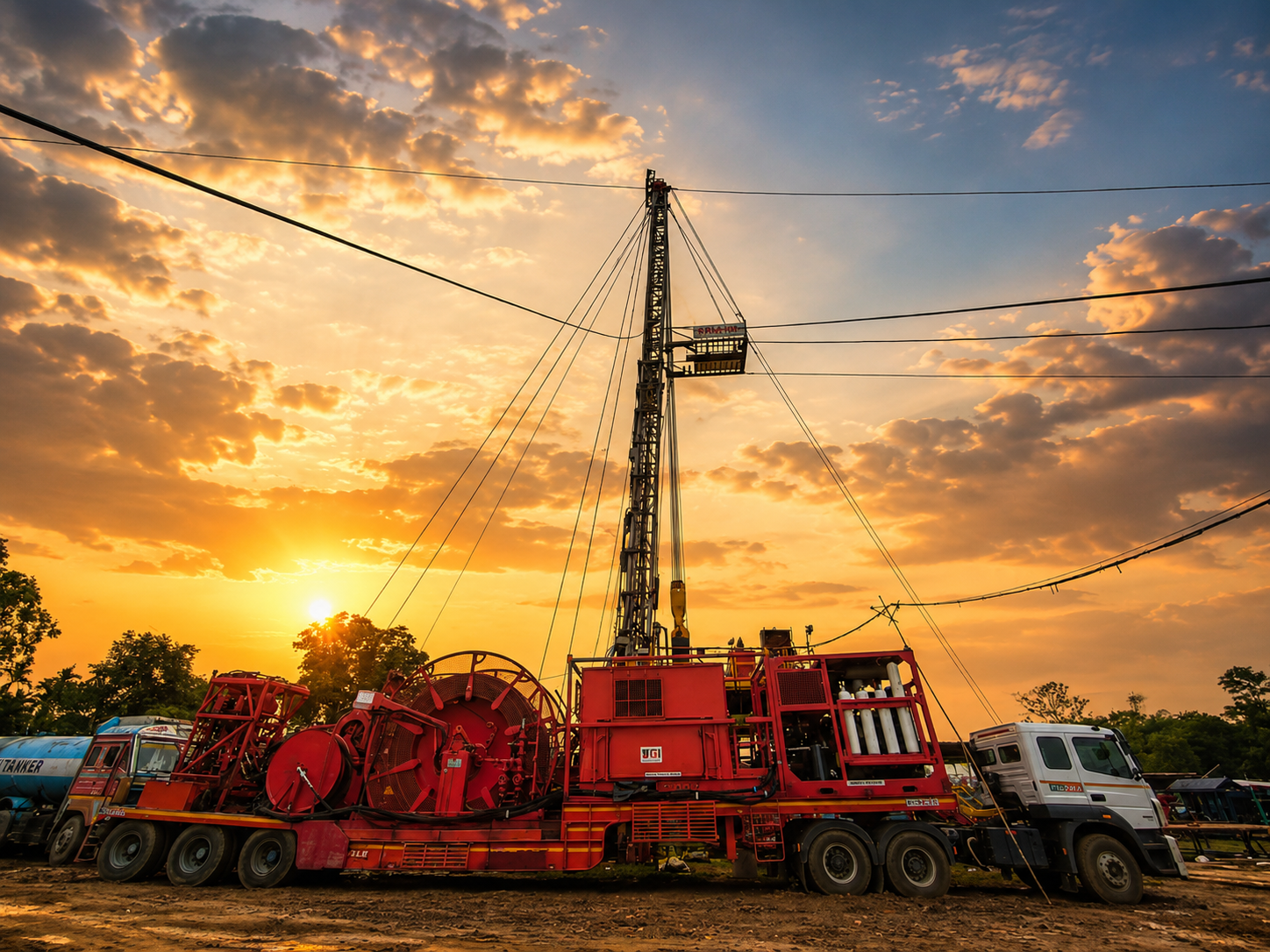
The Workover Section carries out servicing, repair, restoration and remedial operations on existing oil and gas wells so that production from mature fields is sustained and improved. Interventions address reservoir-related problems, mechanical failures, completion issues and any other condition affecting well performance or integrity.
Workover rigs are deployed as required to carry out these interventions safely and efficiently. All operations are executed in accordance with applicable mining, oilfield, safety and statutory regulations, maintaining operational reliability and supporting sustained crude oil and natural gas output from OIL's producing fields.
2. Workover – Technical Service
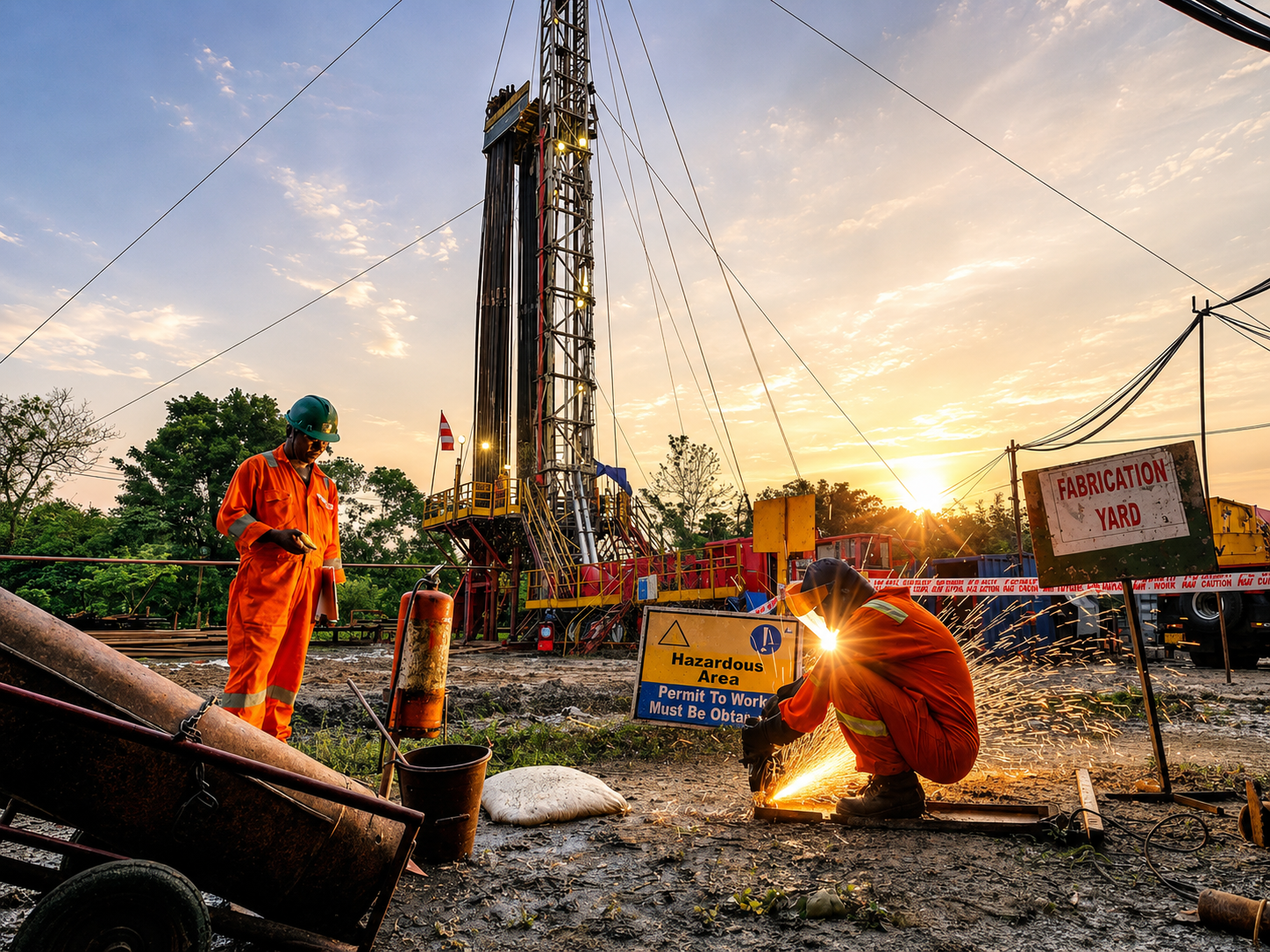
The Workover Technical Service (Workover-TS) Section is responsible for the planning, operation, maintenance, and technical support of mechanical, hydraulic, electrical, pneumatic, pumping, fire-water, tankage, and associated systems deployed at workover installations.
The Section undertakes preventive and breakdown maintenance, rig-up and rig-down, testing, inspection, troubleshooting, and operational readiness of Workover-TS equipment, including rig carrier power systems, hydraulic systems, generating sets, pneumatic systems, well service and cementing pumps, auxiliary pumps, fire-water systems, tankage, hoses, valves, flanges, and associated well-control connections.
It also provides technical and operational assistance during cementing operations and other critical or specialised workover jobs, ensuring equipment availability and safe execution of field activities.
The Section ensures that Workover-TS equipment and operations comply with applicable OISD, DGMS, and other statutory safety requirements. It is also responsible for inventory management of spares and capital items, asset management, asset write-off and disposal, and maintenance of associated technical and asset documentation.
3. Well Completion & Intervention
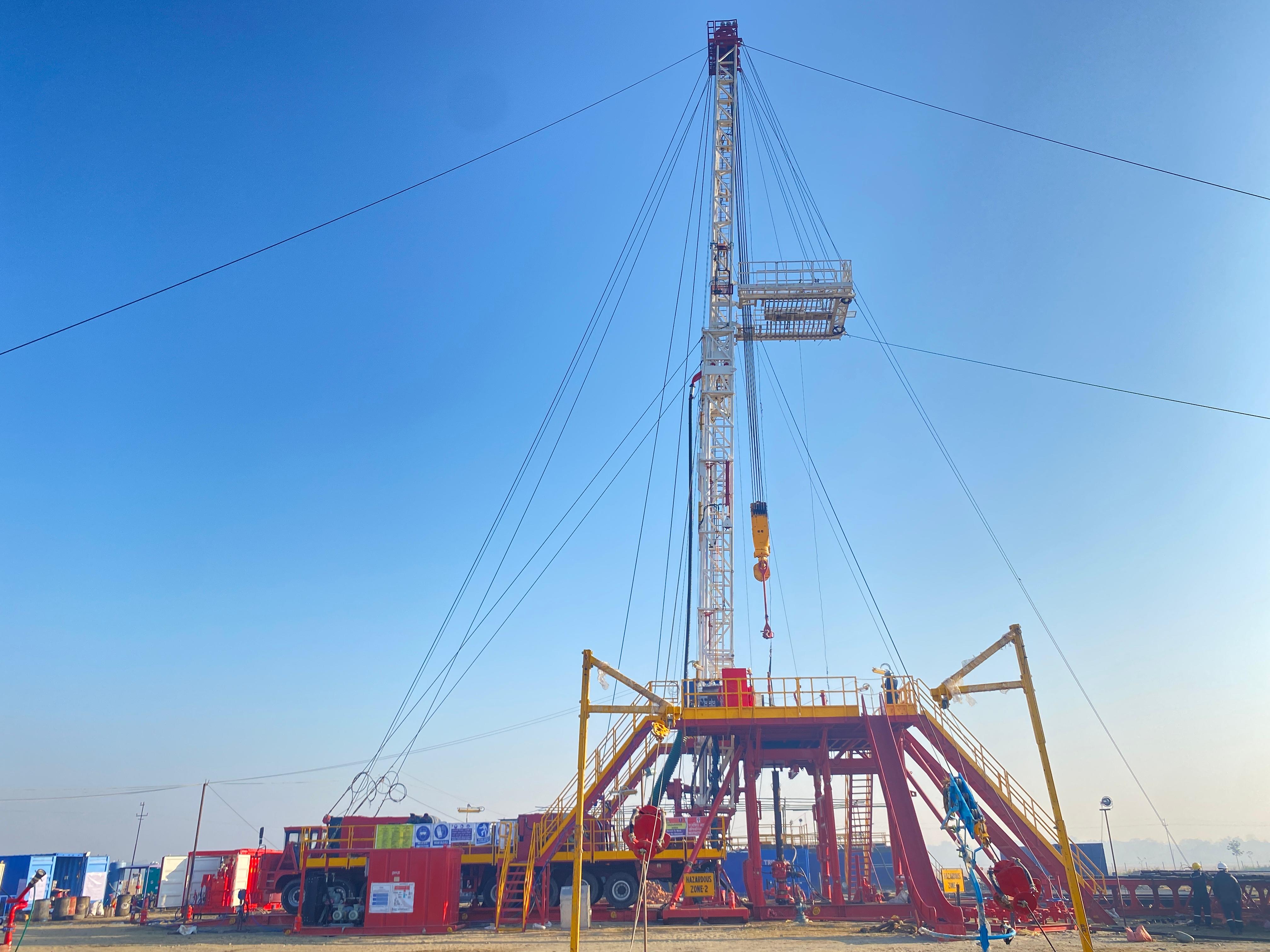
The Well Completion & Intervention (WC&I) Section transforms drilled/workover wells into safe, reliable, production-ready assets through the planning, engineering, installation, commissioning and execution of completion and intervention activities.
Its work runs end to end — wellhead systems, completion strings and artificial lift solutions, followed by post-completion operations including well intervention, emergency well-control support, production optimisation and associated technical services. The Section also provides specialised support for complex well-control and integrity-related operations, ensuring every activity meets applicable engineering standards and operational requirements.

4. Well Stimulation Services & Artificial Lift Pump
Well Stimulation Services & Artificial Lift Pump (WSS & ALP) delivers the services that sustain and enhance crude oil and gas production across the oil fields of Assam and Arunachal Pradesh. Operating under the jurisdiction of two fields, the Section is instrumental in completing newly drilled and workover wells through a range of well intervention operations by CTU, FPU, NPU & slick-line units to maintain the hydrocarbon production from the brown fields of Assam & Arunachal Pradesh.
The Section also installs and commissions artificial lift systems, including Sucker Rod Pumps (SRP) and Electric Submersible Pumps (ESP). Installation, commissioning and maintenance of SRPs are managed entirely in-house; ESP operations are presently executed through hired services.
5. Secondary Recovery
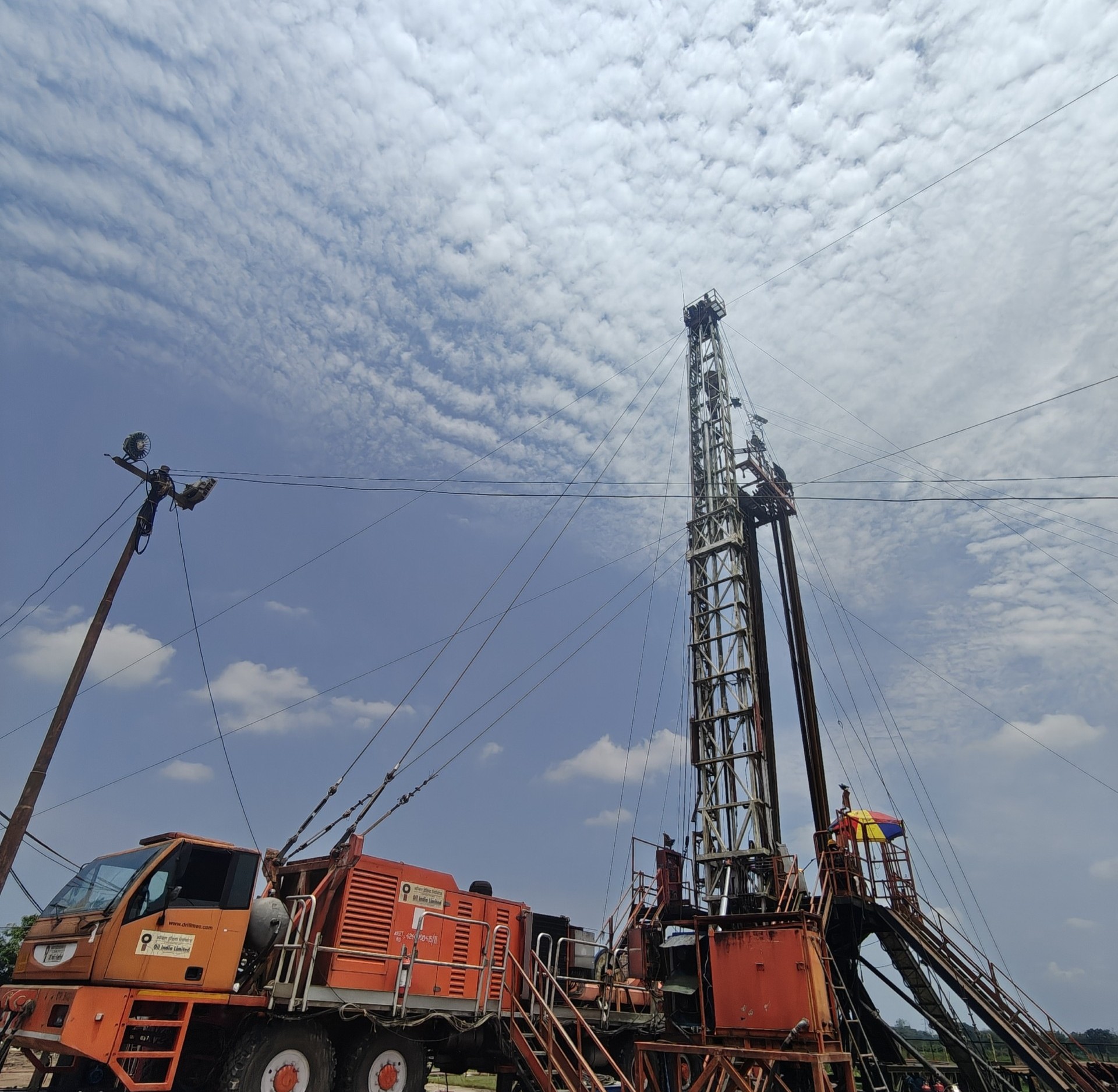
The Secondary Recovery Section sustains and improves hydrocarbon recovery from mature reservoirs by maintaining reservoir pressure and improving sweep efficiency. Its core work is the operation and management of conventional water injection systems, alongside the implementation of suitable Improved Oil Recovery (IOR) and Enhanced Oil Recovery (EOR) techniques and the optimisation of injection practices.
The Section evaluates and applies advanced recovery methods, including carbonated water injection and other appropriate reservoir enhancement techniques, to improve recovery performance. It also promotes sustainable production through Produced Water Re-Injection (PWRI), reducing dependence on freshwater resources and supporting environmentally responsible reservoir management.
6. Utility & Maintenance
The Utility & Maintenance Section ensures a reliable supply of high-quality steam for production and flow assurance activities across field installations. It operates and maintains boiler batteries and mobile steam generators to support uninterrupted field operations, particularly where steam is required to maintain fluid mobility and production continuity.
Beyond day-to-day operation, the Section undertakes preventive and corrective maintenance, equipment monitoring, safety compliance and optimisation work to minimise downtime and improve service availability. It also supports the modernisation of steam-generation facilities through energy-efficient and automated systems, while maintaining compliance with applicable statutory, safety and environmental requirements.

7. Bowser Management & Unloading Stations
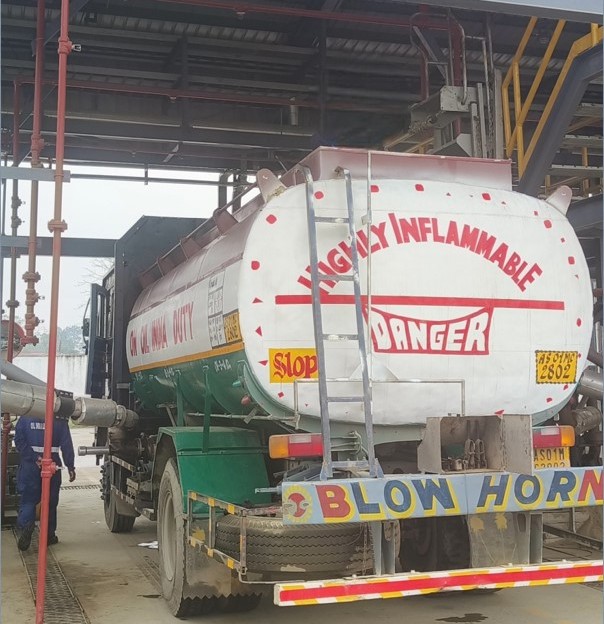
The Bowser Management & Unloading Stations (BM & US) Section plans, deploys, monitors and manages the transportation of crude oil and condensate by road bowser from production installations, drilling sites, workover locations and other field facilities without pipeline connectivity.
It also manages the receipt, unloading and handling of crude oil and condensate at designated unloading stations, including the Central Bowser Unloading Station (CBUS) at Duliajan and the Dikom Bowser Unloading Station (DBUS) at Dikom, ensuring safe and systematic unloading and onward handling of transported fluids. In coordination with concerned departments, the Section additionally manages the disposal of formation water received from field installations.
Production Services Support (PSS) Department
An Enabling Backbone for Production Excellence, Reliability and Sustainability
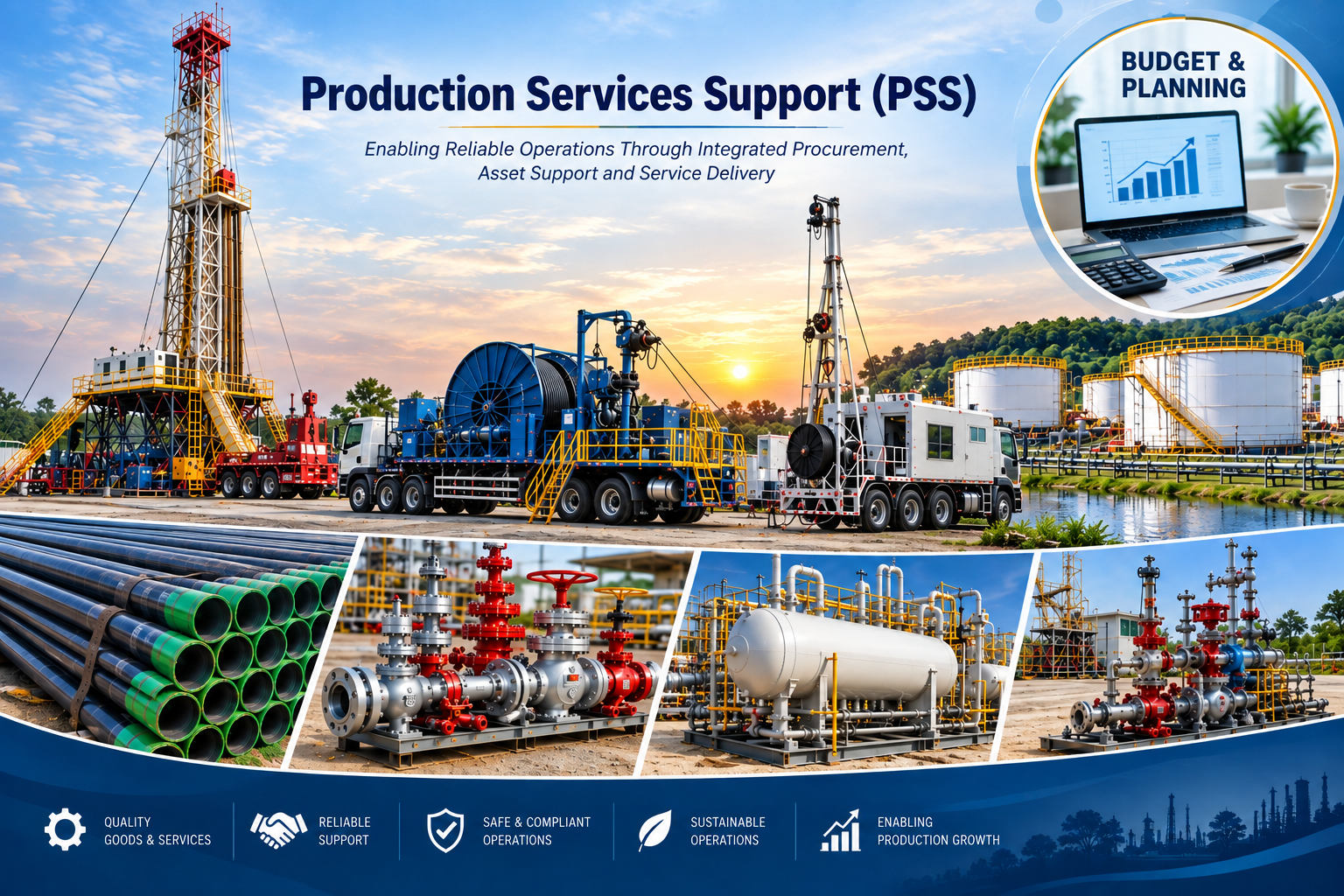
The Production Services Support (PSS) Department functions as a central nodal support arm for OIL's production operations. Working in close coordination with Fields, OGPS, GMS and allied departments, PSS translates operational requirements into timely access to services, equipment, materials, contracts, workover resources, budgets and technical support. By bringing these enabling functions under a coordinated framework, PSS allows field teams to remain focused on production enhancement, production sustenance and safe, reliable operations.
At the core of this mandate, PSS serves as the interface between production needs and the enabling systems required to deliver them. Its responsibilities extend across planning and budgeting, procurement of goods, management of production-related service contracts, workover and well-intervention support, inventory and asset control, Tank Farm operations, HSE support and administrative coordination. It also facilitates technology induction and specialized production-intervention initiatives aimed at strengthening operational capability, reliability and resilience.
PSS coordinates production-related planning, budgeting and prioritization so that resources are aligned with field requirements and operational urgency. It supports procurement by developing technical specifications, processing requirements, carrying out engineering scrutiny, reviewing engineering drawings and quality assurance documents, and facilitating inspection and suitability assurance of critical materials and equipment. In parallel, the Department manages the lifecycle of essential service contracts—from requirement formulation and tendering to mobilization, execution, performance monitoring and closure—thereby supporting continuity of critical production and intervention activities.
The Department further facilitates the availability and deployment of workover resources, specialized intervention services, critical tools and emerging technologies required for well restoration, production enhancement and operational continuity. Systematic inventory and asset management help maintain readiness of critical production items. A significant operational responsibility of PSS is the operation and maintenance of the four key crude oil Tank Farms—ITF Tengakhat, STF Madhuban, CTF Duliajan and CTF Moran. These facilities receive crude oil from production installations and collectively provide approximately 1,95,050 KL of storage capacity, forming an important link in the safe handling, storage and onward evacuation of crude oil. Through HSE systems, statutory oversight and compliance-oriented execution, PSS reinforces engineering integrity, operational safety and disciplined governance across the activities it supports.
The importance of PSS lies in the integration of these diverse support functions around a common production objective. Centralized coordination enables better prioritization, resource optimization, standardization, engineering assurance and governance, while reducing the administrative and procurement burden on operating teams. PSS therefore acts as a vital bridge between strategy and field execution, helping ensure that production enhancement and sustainability interventions are supported by the right resources, appropriate technical and commercial controls, and responsive service delivery. Through this integrated support model, PSS contributes directly to production reliability, operational continuity and the long-term sustainability of OIL's production operations.
Gas Management Services
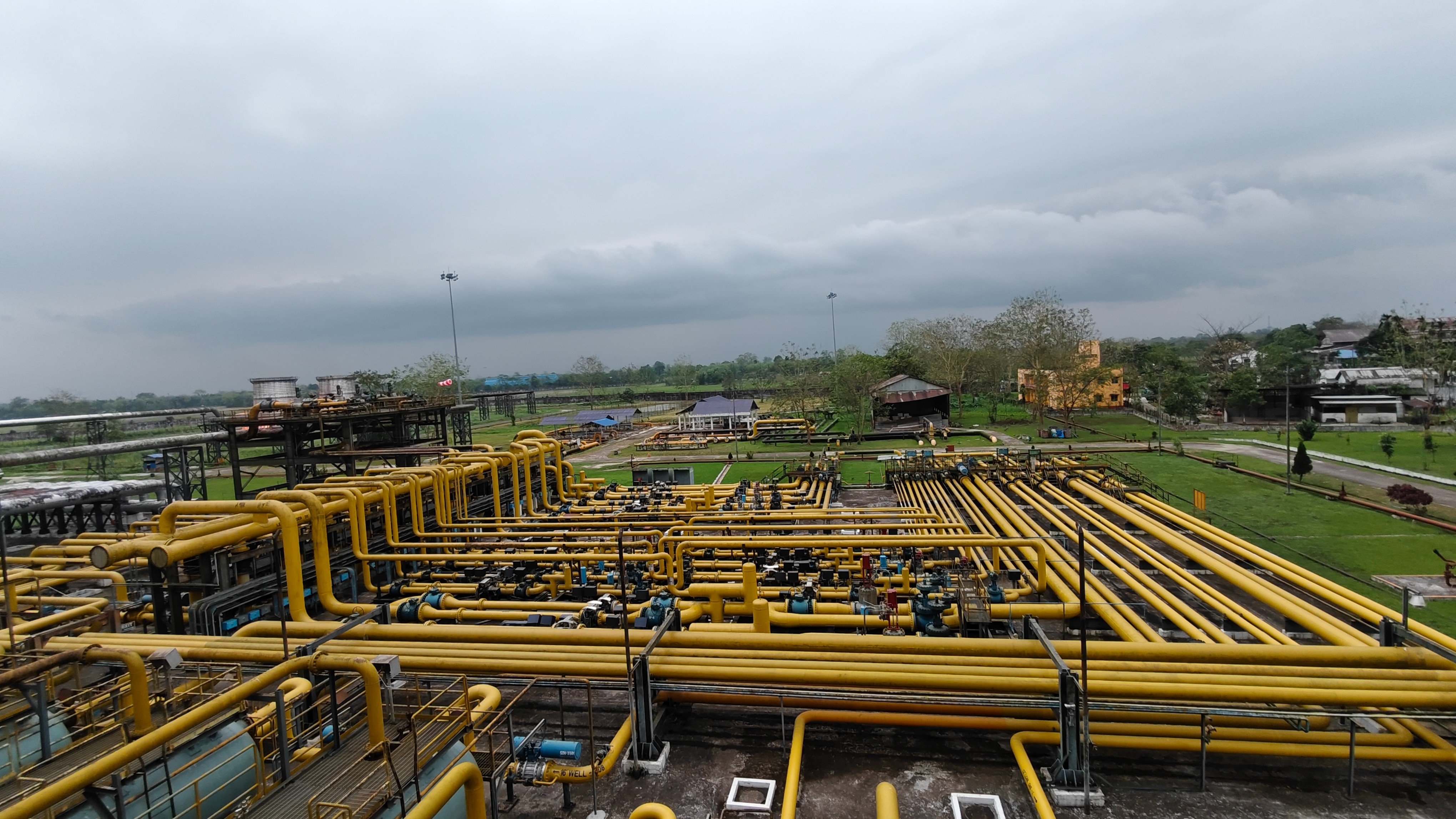
The Gas Management Services Department has a pivotal role in supporting the gas business activities of the company. Main functions are Compressor Maintenance, SCADA, Natural Gas sales, Field Gas utilizations and Project Management for enhancing Gas infrastructure.
The Gas Management Services Department of Oil India Limited plays a crucial role in supporting the company's gas business activities through maintenance, optimization, sales, and project management initiatives aimed at maximizing the value of natural gas resources.

LPG Recovery Plant
LPG as diversification in the business portfolio was initiated by OIL four decades back. The LPG Recovery Plant of OIL is now rated to produce 30,000 TPA of LPG and 18,000 TPA of condensate from Natural gas. The LPG is stored in Bullets and condensate in separate storage tanks. From the storage tanks, LPG is filled into cylinders or road tankers in the LPG Filling plant. The entire production of LPG is lifted by M/s Indian Oil Corporation Limited (IOCL- AOD) for marketing.
Crisis Management Team
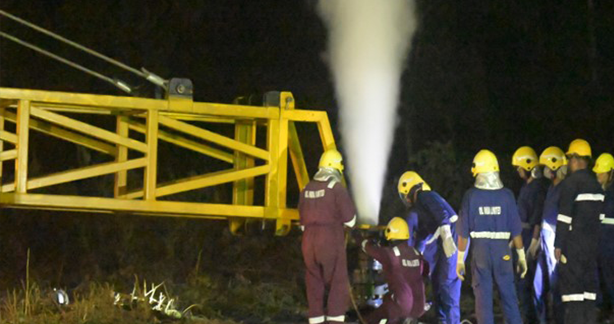
Since 2020, the Company has massively invested in its CMT equipment inventory and is aggressively taking proactive actions to develop a Strong and a Resilient Crisis Management Team for handling blowouts, well fires and kicks in Drilling, Workover and Producing Wells.
Further, MOUs with reputed global blowout control experts like M/s Cudd Well Control and M/s Wild Well Control are in place since 2023.
In October 2023, the inhouse CMT Team along with OIL Technical team successfully controlled the NHK#67 blowout in October 2023, with an in-house team effort and using the OIL's own CMT resources.
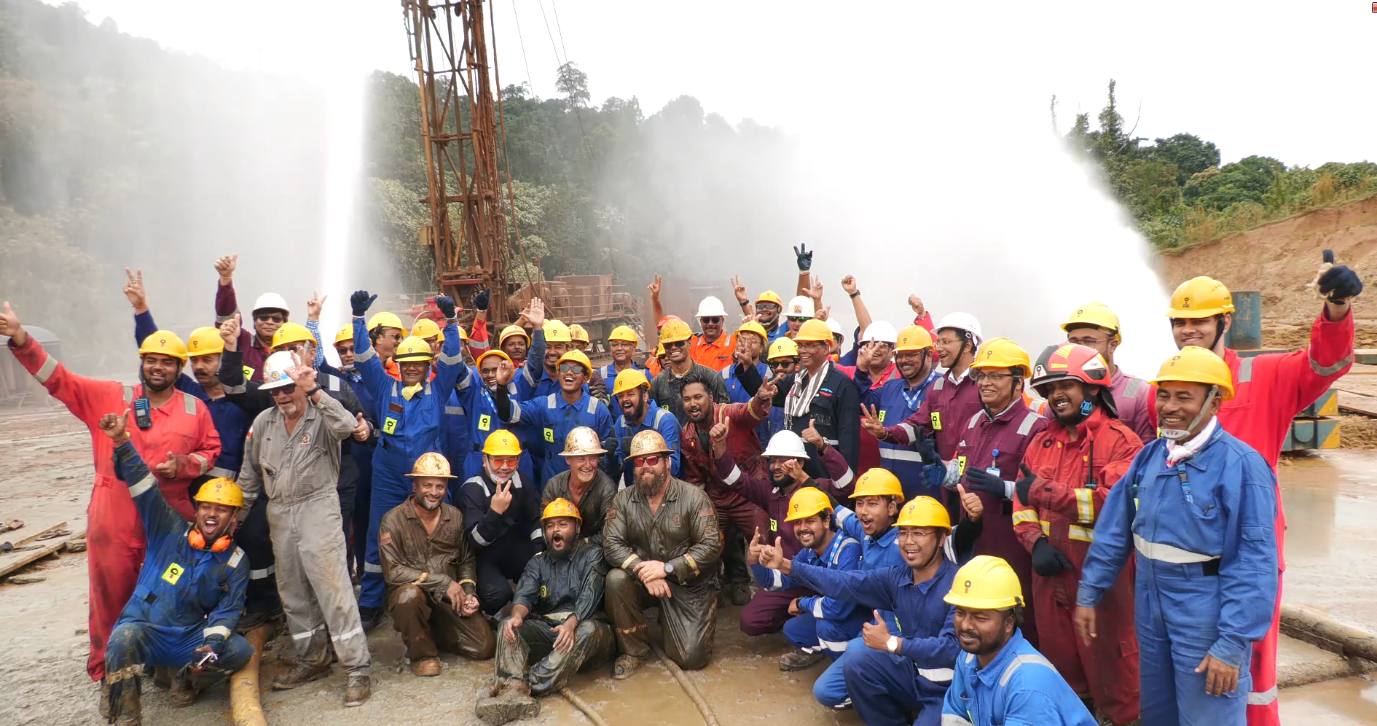
In November 2025, OIL CMT team, in coordination with the global experts, successfully controlled the KSG#76 blowout in the Kharsang Oilfield of M/s GeoEnPro in Arunachal Pradesh within 22 days. The operation demonstrated the Company's preparedness to respond to major well-control emergencies (even in fields of other E&P Companies) through the deployment of trained personnel, coordinated decision-making and dedicated crisis-management resources.
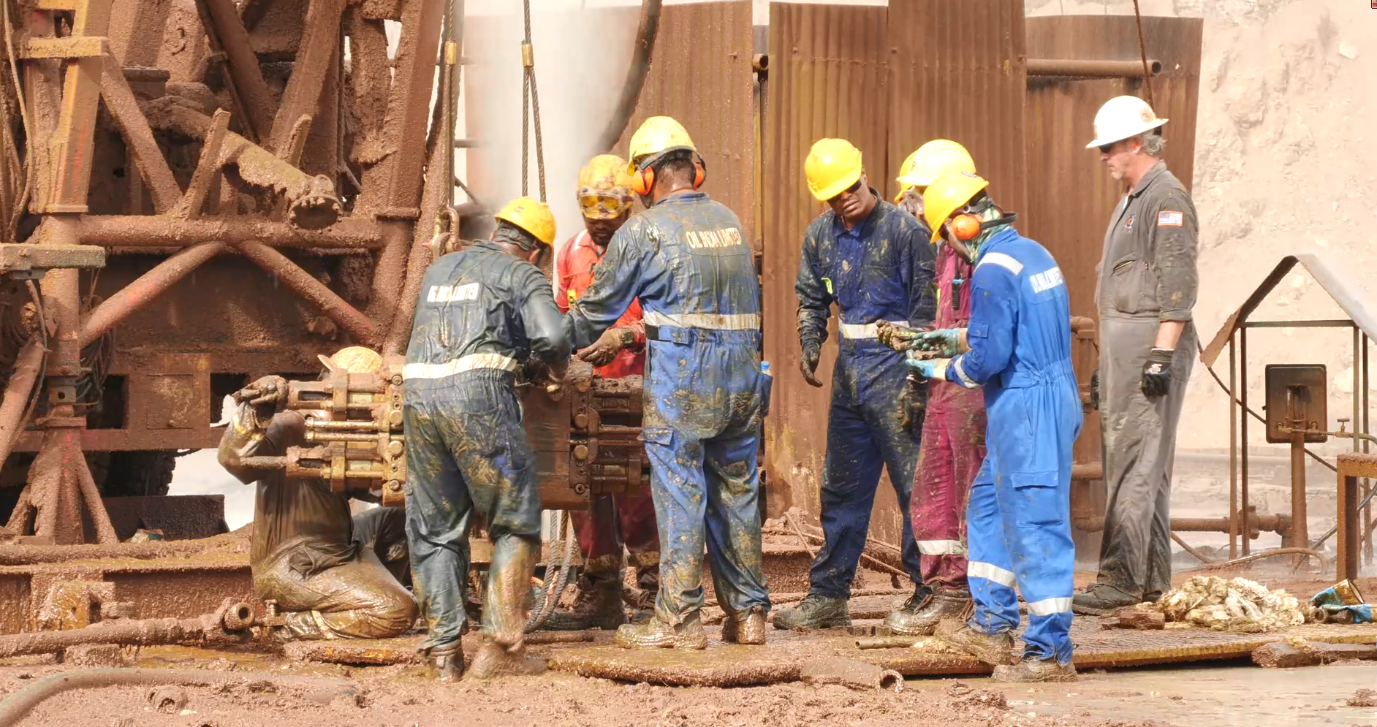
The successful control of the KSG#76 blowout further reflects OIL's continuing efforts to strengthen its in-house capabilities for managing blowouts, well fires and kicks in drilling, workover and producing wells.
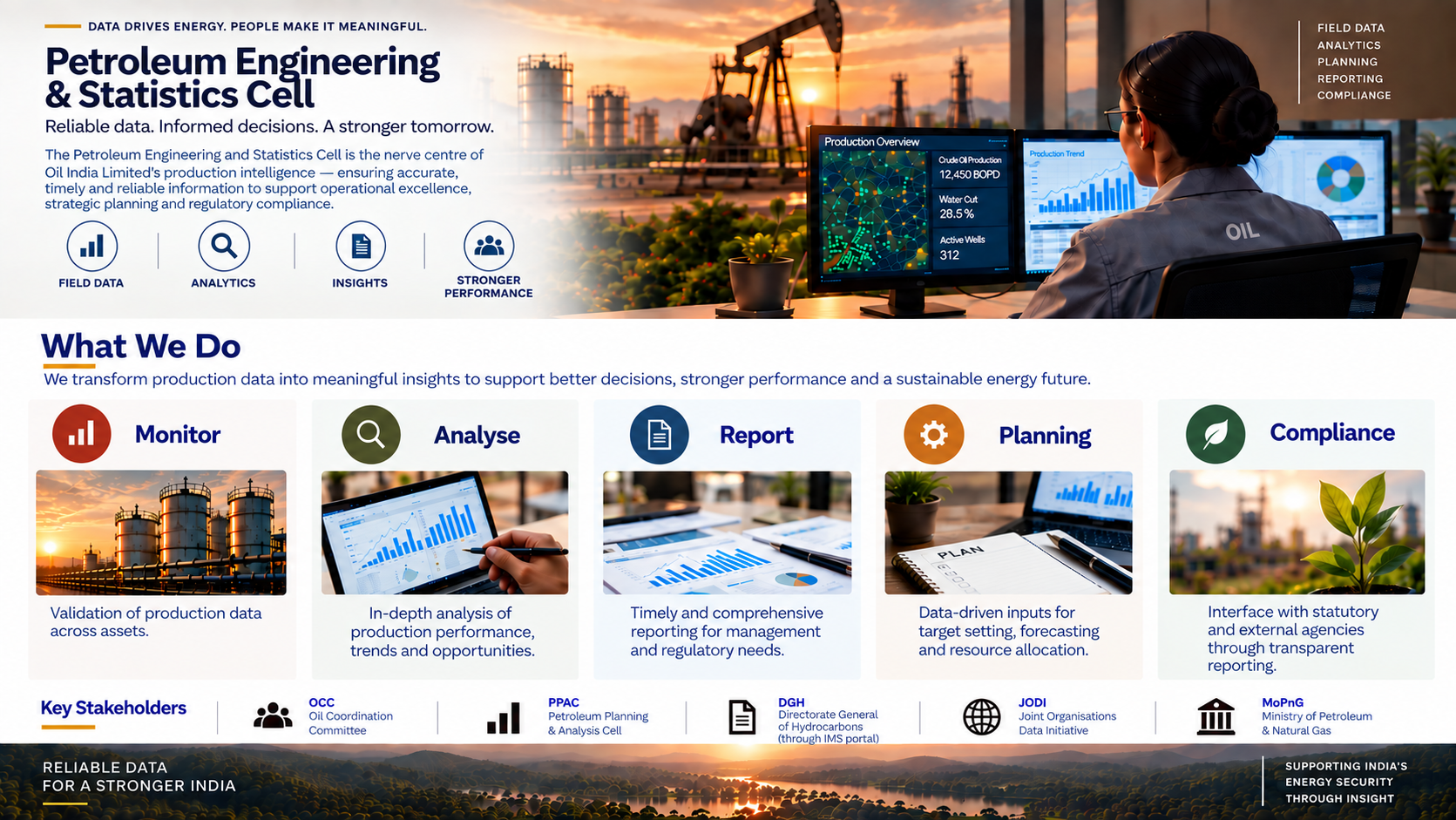
Petroleum Engineering & Statistics (PE&S) Cell
Key Responsibilities
Production Reporting and Data Management
Collect, validate and compile production data from Fields, Regional Offices and Joint Ventures, and generate reports daily, weekly, monthly, quarterly and annual intervals to meet management and regulatory requirements.
- Field-wise production tracking
- Classification of production gains and losses
- Water-related parameter monitoring
- Data management in SAP and regulatory portals
Production Performance Analysis
Continuous monitoring and analysis of production trends to support sustained and optimized production.
- Analysis of decline trends and well performance
- Evaluation of workover and drilling contributions
- Monitoring of tank farm stock and water drain for reconciliation accuracy
- Identification and implementation of corrective measures
Production Planning and Reconciliation
Provide analytical inputs for production planning, reconciliation and target setting.
- Annual production plans and targets under MoU, Budget Estimate (BE) and Revised Estimate (RE)
- Monthly production reconciliation
- Crude oil allocation plans for Oil Coordination Committee (OCC) meetings
- Well inventory analysis
- Ullage and closing stock reports
Data for External Agencies
Provide timely and accurate production data to various statutory, regulatory and external agencies.
- OCC – Projected crude oil delivery plans
- PPAC – Production data and related information
- DGH – Data submission through IMS portal
- JODI – Production and disposal statements
- MoPNG – Monthly reporting
- Timely response to queries from external agencies


